








Irrigation and Irrigation Systems
There are several different types of irrigation, each with its own unique methods and applications. Here are some of the most common types:
1. Surface Irrigation
Description: This is the oldest and most common form of irrigation, where water is distributed over the land surface by gravity flow.
Methods:
Basin irrigation: Water is flooded into level basins or fields surrounded by dikes.
Furrow irrigation: Water flows down small channels or furrows between rows of crops.
Border strip irrigation: Water flows down gently sloping strips of land confined by borders.
Advantages: Low cost, simple to implement.
Disadvantages: Can be inefficient with water use, uneven water distribution, not suitable for all soil types or terrains.
2. Sprinkler Irrigation
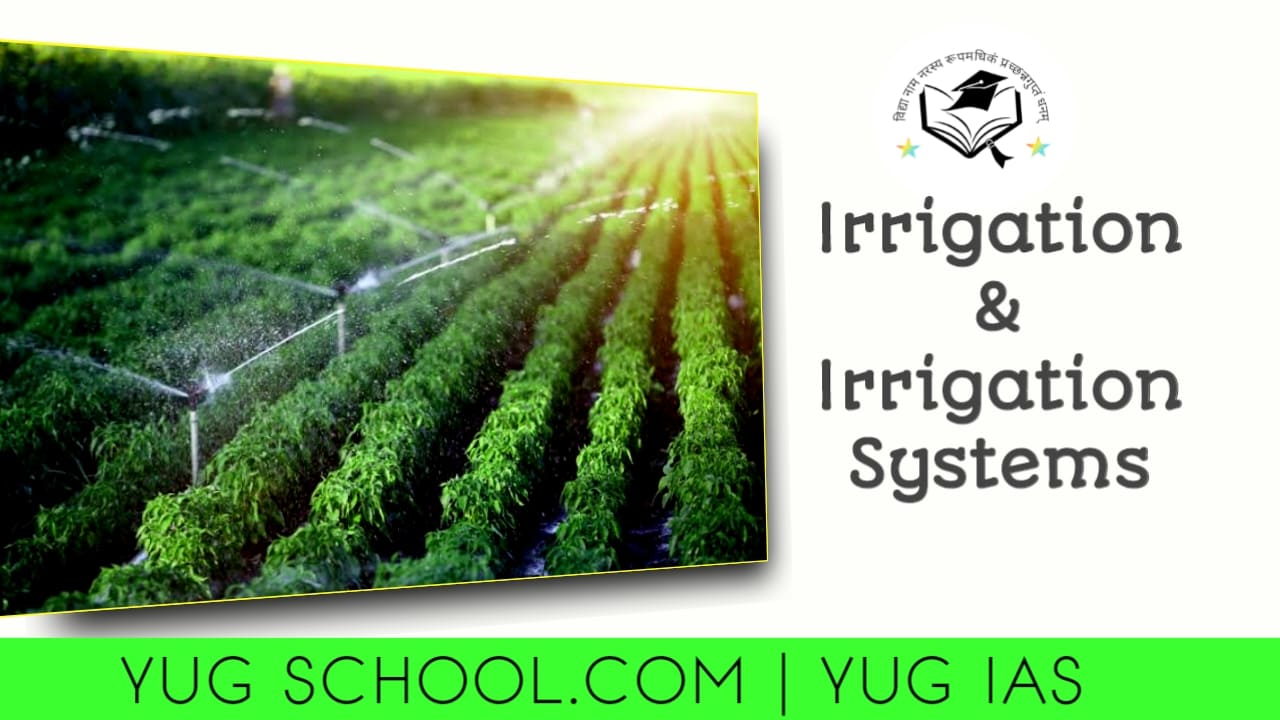
Description: Water is sprayed over the field through a network of pipes and sprinklers, mimicking natural rainfall.
Methods:
Center pivot irrigation: A long, rotating pipe with sprinklers moves in a circle around a central point.
Lateral move irrigation: A linear pipe with sprinklers moves across the field.
Traveling gun irrigation: A large sprinkler mounted on a wheeled cart is pulled across the field.
Advantages: Efficient water use, uniform water distribution, suitable for various terrains and soil types.
Disadvantages: Higher initial cost, requires energy to operate, can be affected by wind.
3. Drip Irrigation
Description: Water is delivered directly to the roots of plants through a network of tubes and emitters.
Methods:
Surface drip irrigation: Emitters are placed on the soil surface near the plants.
Subsurface drip irrigation: Emitters are buried below the soil surface.
Advantages: Most efficient water use, minimizes water loss through evaporation, reduces weed growth.
Disadvantages: Higher initial cost, requires maintenance to prevent clogging, not suitable for all crops.
4. Subsurface Irrigation
Description: Water is applied below the soil surface through a network of perforated pipes.
Methods:
Water table control: Raising and lowering the water table to irrigate the root zone.
Subsurface drip irrigation: Similar to drip irrigation, but emitters are buried deeper.
Advantages: Efficient water use, reduces evaporation, can be used to manage salinity.
Disadvantages: High initial cost, requires careful design and maintenance, not suitable for all soil types.
In addition to these main types, there are also other methods such as:
Manual irrigation: Water is applied by hand using buckets, watering cans, or hoses.
Micro irrigation: Water is applied in small amounts to individual plants using various methods.
Automated irrigation: Irrigation systems are controlled by timers or sensors to optimize water use.
The choice of irrigation type and method depends on various factors, including:
Climate: Rainfall patterns, temperature, and wind.
Soil type: Water-holding capacity and infiltration rate.
Crop type: Water requirements and root depth.
Topography: Slope and land features.
Water availability: Quantity and quality of water source.
Cost: Initial investment and operating expenses.
Labor: Availability and cost of labor.
By carefully considering these factors, farmers can select the most appropriate irrigation system to maximize crop yields while conserving water and other resources.